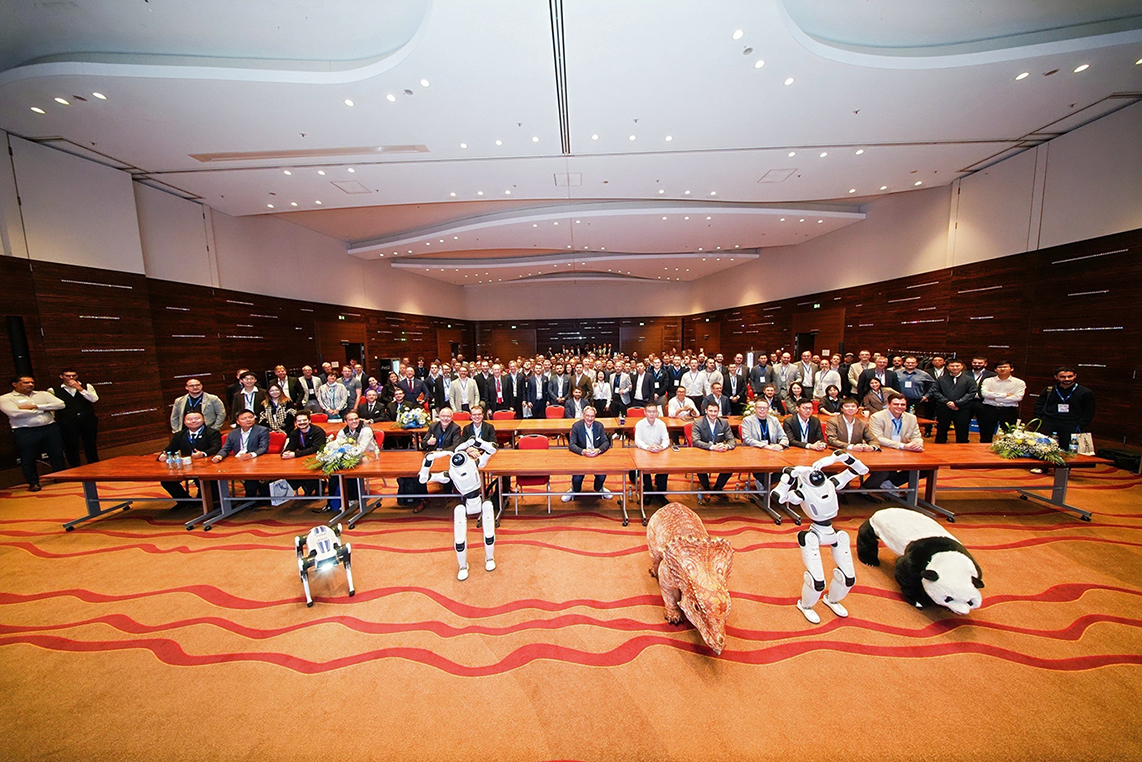
Frankfurt am Main, Germany, October 20, 2026 —— Embodied intelligence is increasingly moving beyond pure technology demonstrations toward validation and application under real-world conditions. As a result, the industry’s attention is shifting toward a more fundamental question: what measurable value can new technologies actually create in practice?
Considerable challenges still lie between a successful demonstration and a customer’s investment decision — just as they do between proof of concept and series production, and between deploying a single installation and scaling across multiple sites. Whether embodied intelligence systems can deliver lasting, tangible value is therefore becoming a decisive benchmark for the successful transfer of technology into practice.
Against this backdrop, the DOBOT Robotics Ecosystem Conference & Product Launch 2026 took place in Frankfurt. DOBOT presented three new products — LUMO, PULSA and the CRH Series — and welcomed around 200 executives from European manufacturing companies, systems integrators, researchers and automation experts.

Together, participants explored DOBOT’s latest developments in embodied intelligence and industrial automation, as well as new opportunities to integrate intelligent robotics into everyday environments and deeper into industrial production processes.
From industrial applications to embodied intelligence
Since its founding in 2015, DOBOT has followed the principle of “making machines more capable and people more valuable.”
With the help of robotics, the company aims to relieve people of repetitive and physically demanding tasks, giving them more time and freedom for creative, value-adding work.
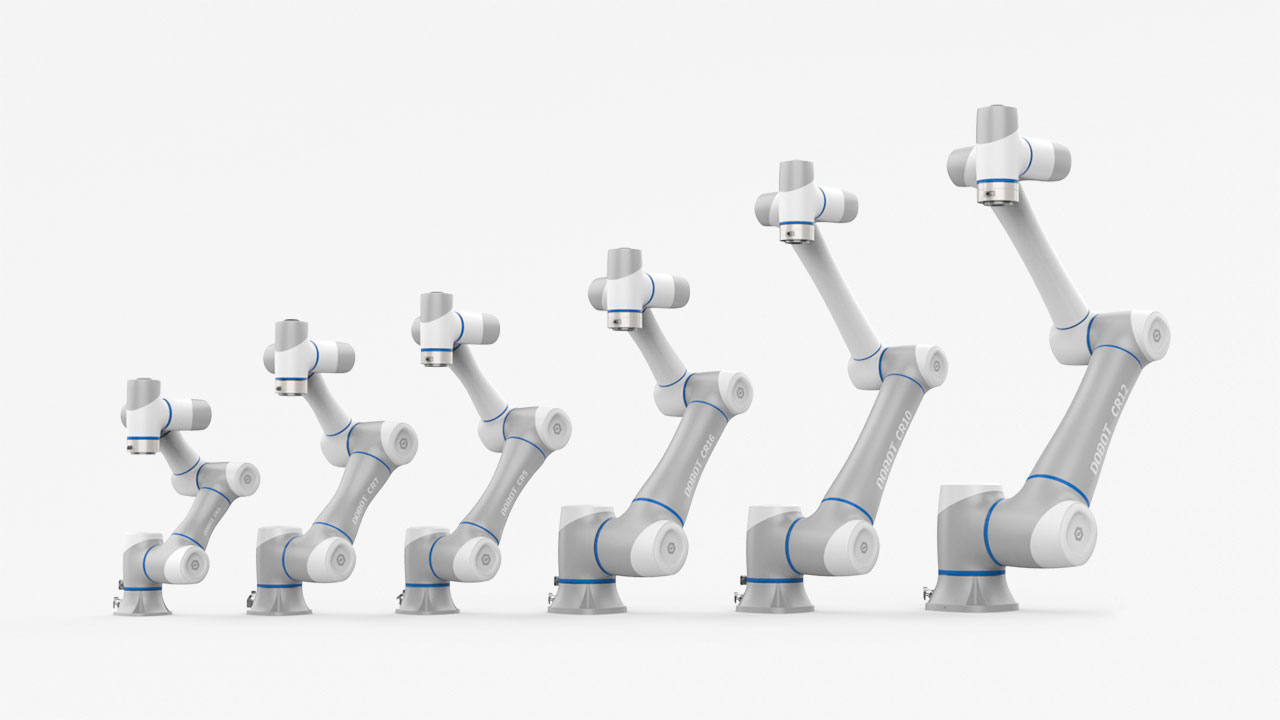
On this basis, DOBOT collaborative robots are now used in 15 major industries and more than 200 application scenarios. Its customers include over 100 Fortune Global 500 companies, and DOBOT has delivered more than 100,000 robot units in total.
From its first robot to more than 100,000 delivered units, DOBOT has built extensive experience in motion control, force control, functional safety and large-scale deployment. These capabilities now form an important foundation for the company’s continued development in embodied intelligence, enabling robots to execute tasks precisely and maintain stable performance under a wide range of technical and operational conditions.
Different applications require different robot forms and capabilities — from precise tasks at fixed workstations, to mobile manipulation across larger work areas, to service-oriented applications with direct human-robot interaction.
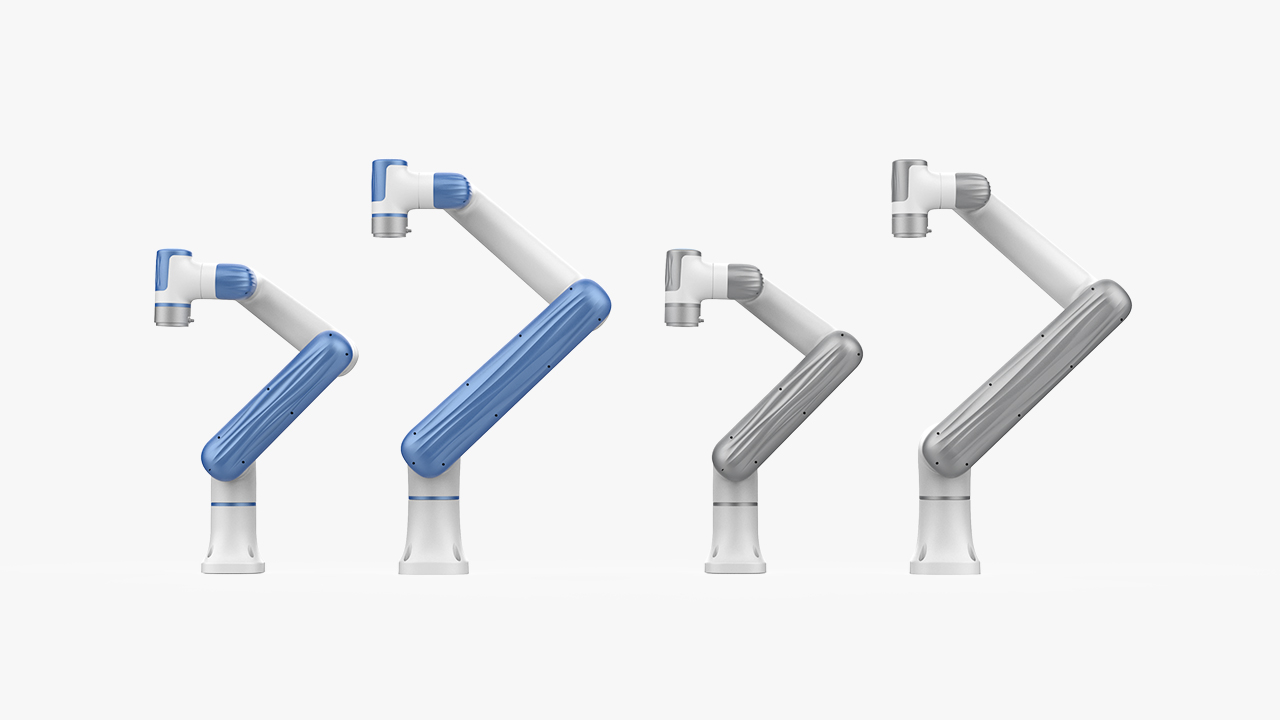
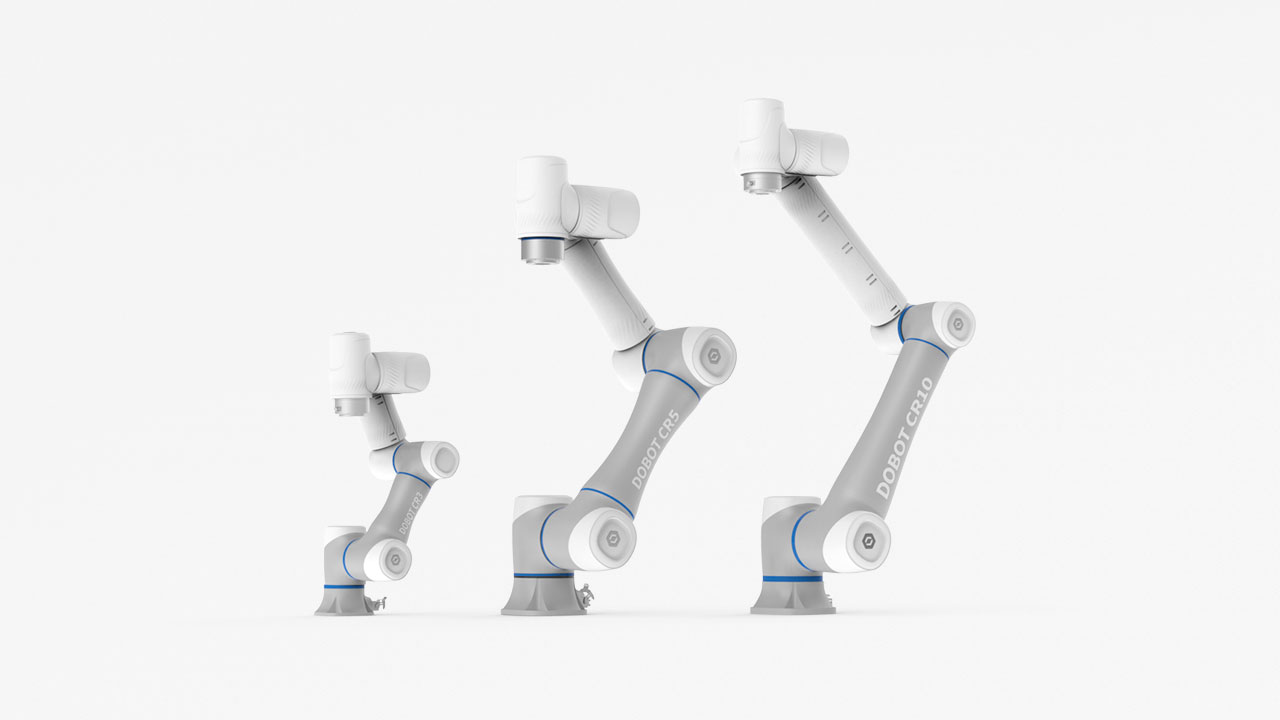
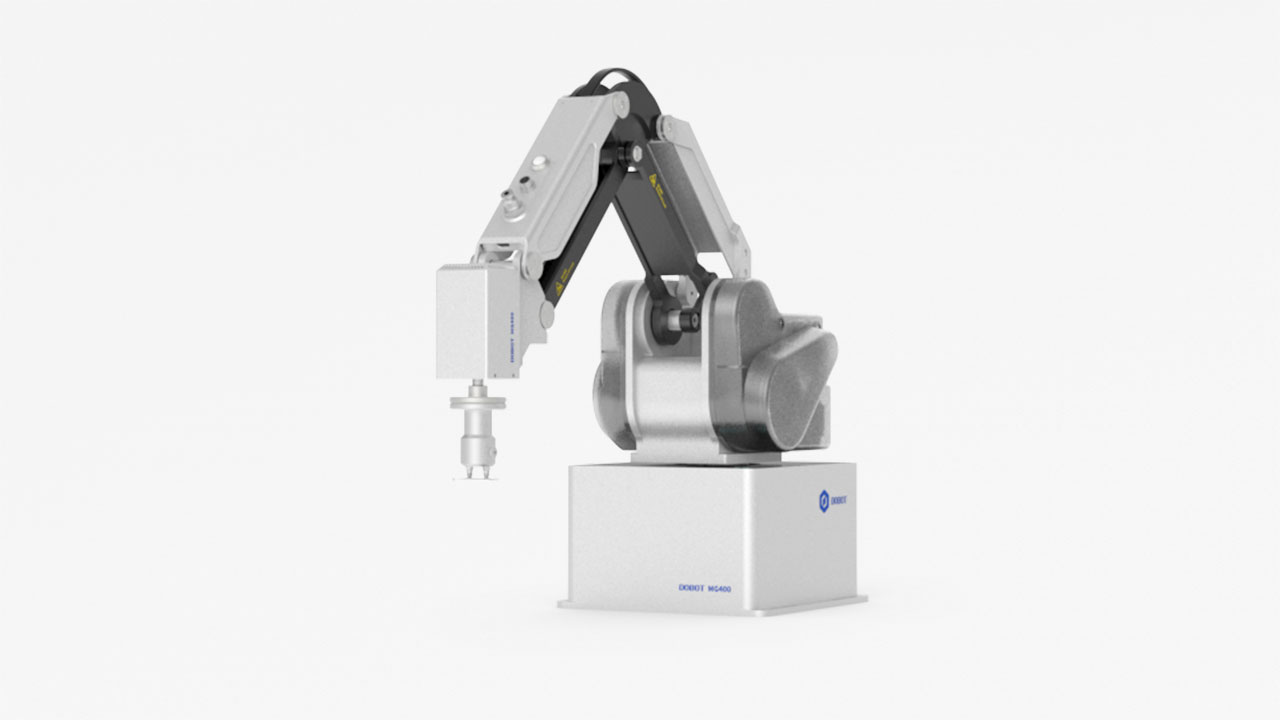
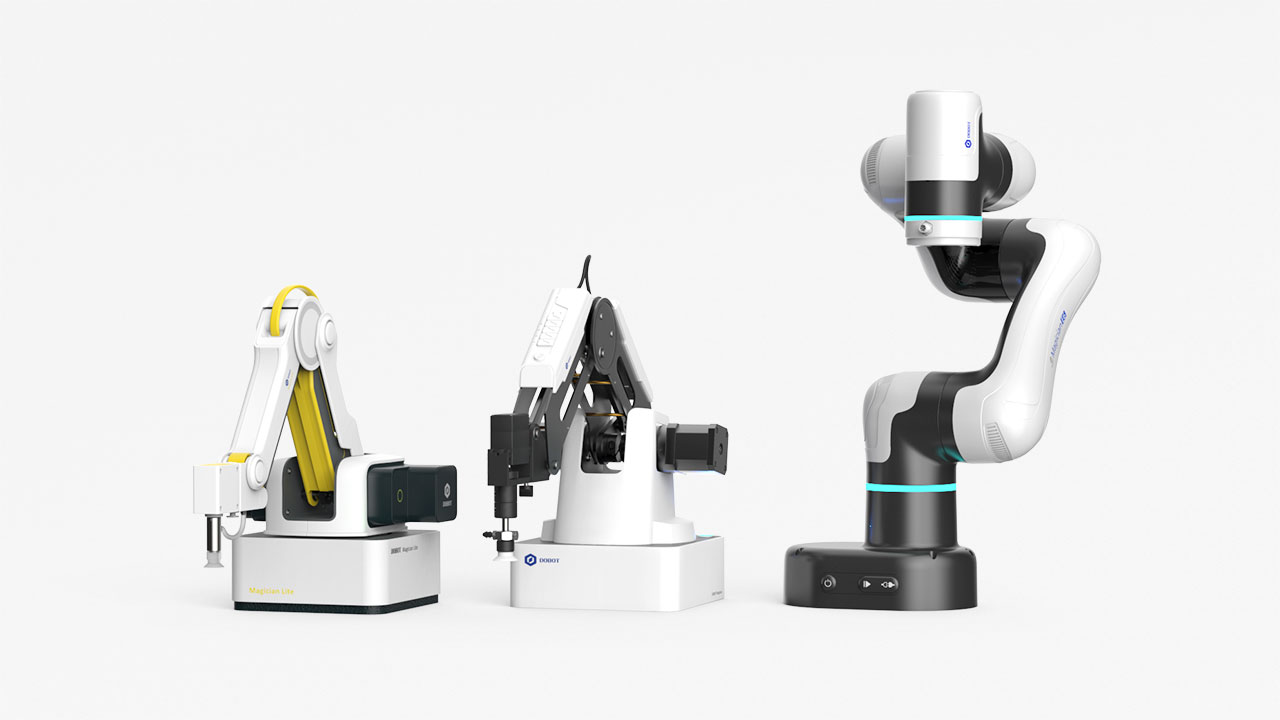
To meet these requirements, DOBOT is continuously expanding its portfolio with collaborative robotic arms, humanoid robots, mobile robotic platforms and multi-legged robotic systems.
In addition, the company has developed DobotWAM, its own embodied foundation model. It combines perception and decision-making capabilities with years of experience in executing robotic tasks in the real world.
The goal is to evolve robots beyond the mere execution of predefined instructions, gradually enabling them to understand tasks and handle more complex and dynamic real-world environments.
From everyday environments to the production line: three new products, three distinct strengths At the conference, DOBOT introduced LUMO, PULSA and the CRH Series, expanding its robotics portfolio with three platforms focused on different application areas.
DOBOT LUMO
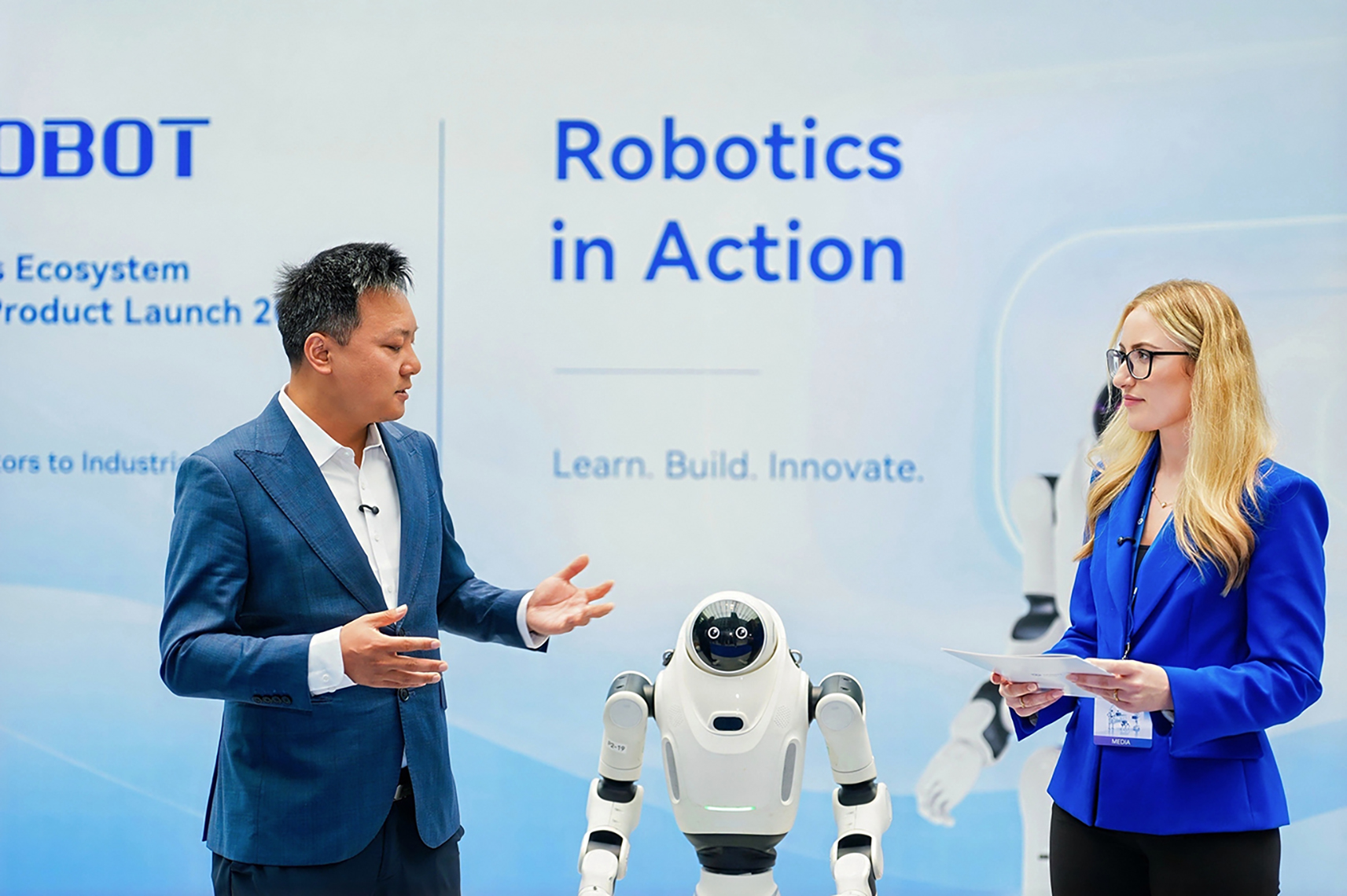
DOBOT LUMO is a new-generation embodied intelligence robot for personal assistance in the home, for research and teaching, and for commercial service applications.
LUMO is based on the company’s proprietary DobotWAM embodied foundation model, which combines vision-language-action models with 3D spatial understanding, robotic motion constraints and closed-loop data from real-world environments.
Thanks to multimodal emotional intelligence, the robot can recognise human emotions and intentions from visual and voice information. Long-term memory is stored locally by default.
Advances in AI models, robotic motion control and real-world applications are increasingly creating the conditions to move intelligent robots from the demonstration stage into concrete fields of use.
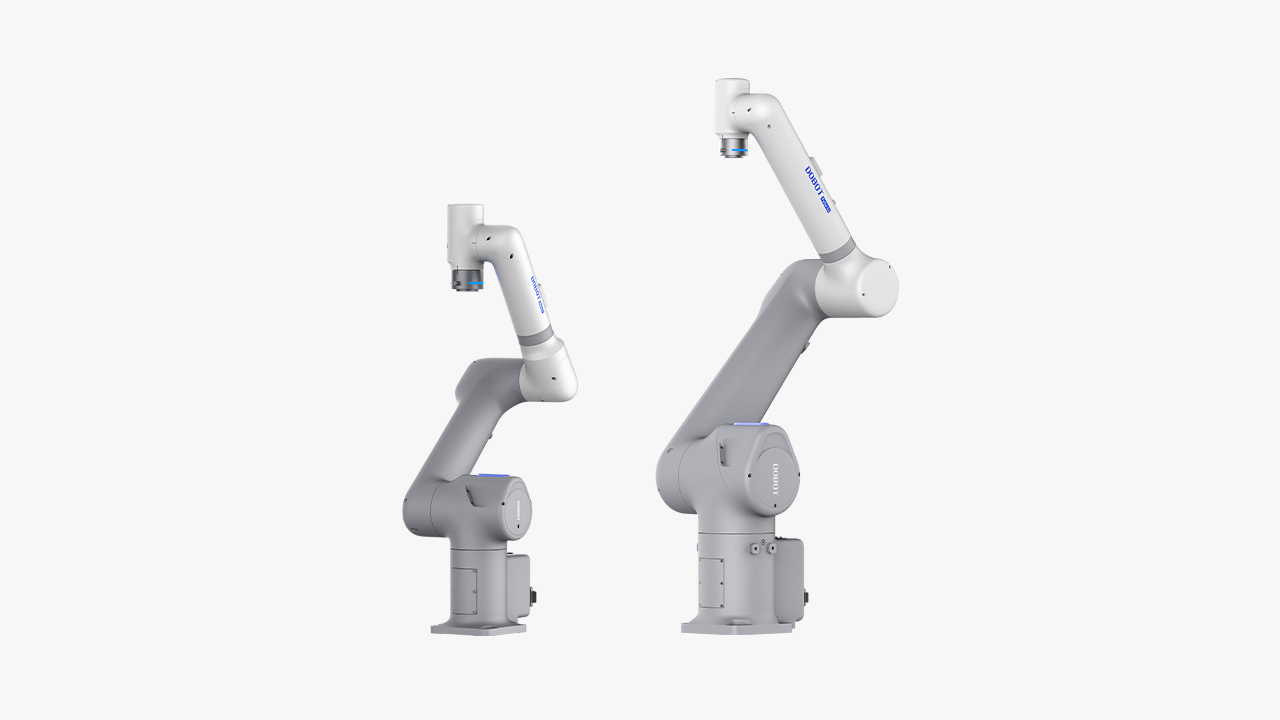
PULSA
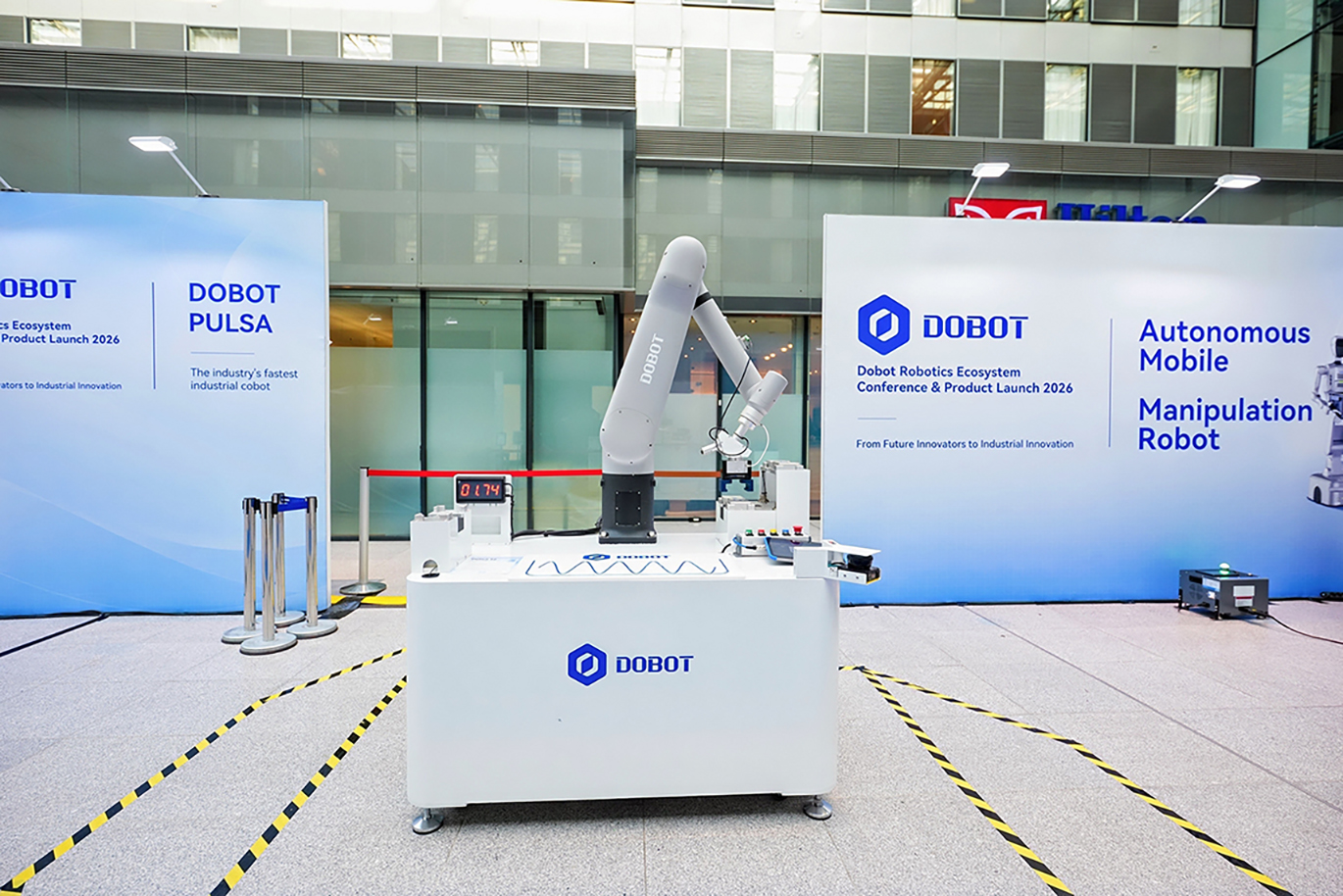
PULSA is available with payloads of 7 kg and 12 kg and achieves repeatability of ±0.02 mm and ±0.03 mm respectively.
The PULSA 7 reaches a maximum speed of 790°/s at the sixth axis, while the PULSA 12 reaches up to 735°/s. The series thus offers the performance required for applications with demanding short cycle times. Improved off-centre payload capability also supports longer tools and workpieces with a shifted centre of gravity.
PULSA supports various operating modes for both unattended high-speed operation and human-robot collaboration.
The relevant functional safety architecture achieves ISO 13849-1 PLd Cat. 3 and includes more than 20 configurable safety functions. In addition, the system can be combined with safety light curtains and other protective devices to meet a wide range of application requirements.
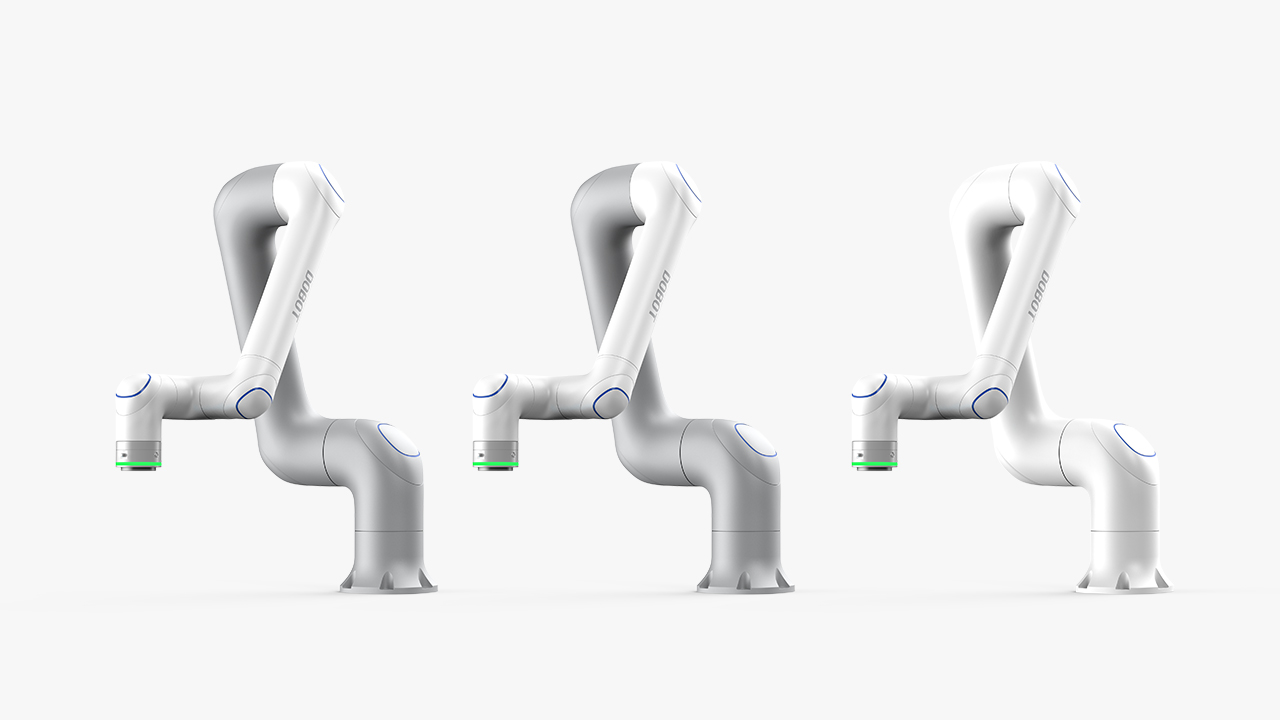
DOBOT CRH Series
The DOBOT CRH Series is a high-performance collaborative robot platform for demanding industrial applications such as welding, painting and inspection.
The series is available with payloads of 7 kg and 12 kg, combining high motion speed with precise control and stable process execution.
The maximum speed at the sixth axis is 450°/s, and the instantaneous TCP speed reaches 7 m/s.
DOBOT’s HyperMove algorithm optimises acceleration, deceleration and motion paths to reduce vibration and mechanical stress. As a result, fast start-and-stop movements and continuous changes of direction are executed more smoothly, better reconciling the productivity and stability requirements of complex industrial processes.
Integrated internal cable routing simplifies the integration of vision systems and end-of-arm tooling, reduces cable interference and provides greater freedom of movement and flexibility in system planning.
The CRH Series is also TÜV certified, meets the requirements of ISO 13849, and features torque sensors in all joints as well as more than 30 configurable safety functions. This allows different safety concepts to be implemented flexibly for different workstations.
Innovation creates new application possibilities. Ecosystems turn them into real value.
Innovation can open up new fields of application. However, the path from a single robot to a complete, practical solution requires collaboration among various players within the industrial ecosystem.
The choice of tools, vision, safety configuration and integration into existing production systems influences implementation time and process performance as well as the customer’s return on investment.
At this year’s conference, ecosystem partners including Siemens, SCHUNK, Mech-Mind, SICK, Piab, OnRobot and SCHMALZ were present.
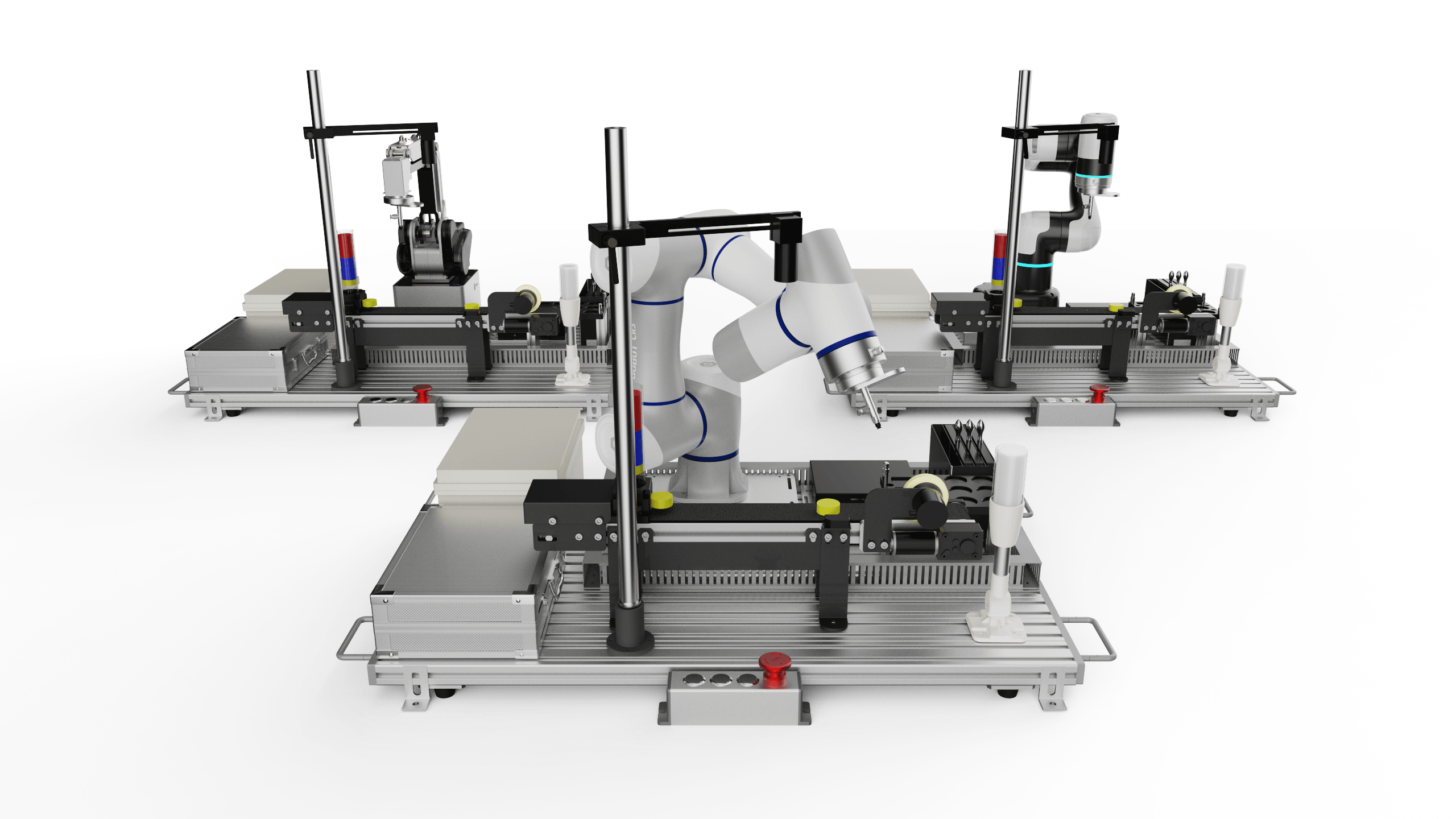
A total of 18 live solutions were demonstrated across education and research, embodied intelligence and industrial applications, combining robots with peripheral equipment and complete workstations.
Industrial customers Unsinn and Unista shared their experience from the practical use of palletising and welding solutions. Participants thus gained insights into aspects such as system stability, implementation time and return on investment under real operating conditions.
Transferring embodied intelligence from the laboratory to production also requires clearer standards and safety concepts.
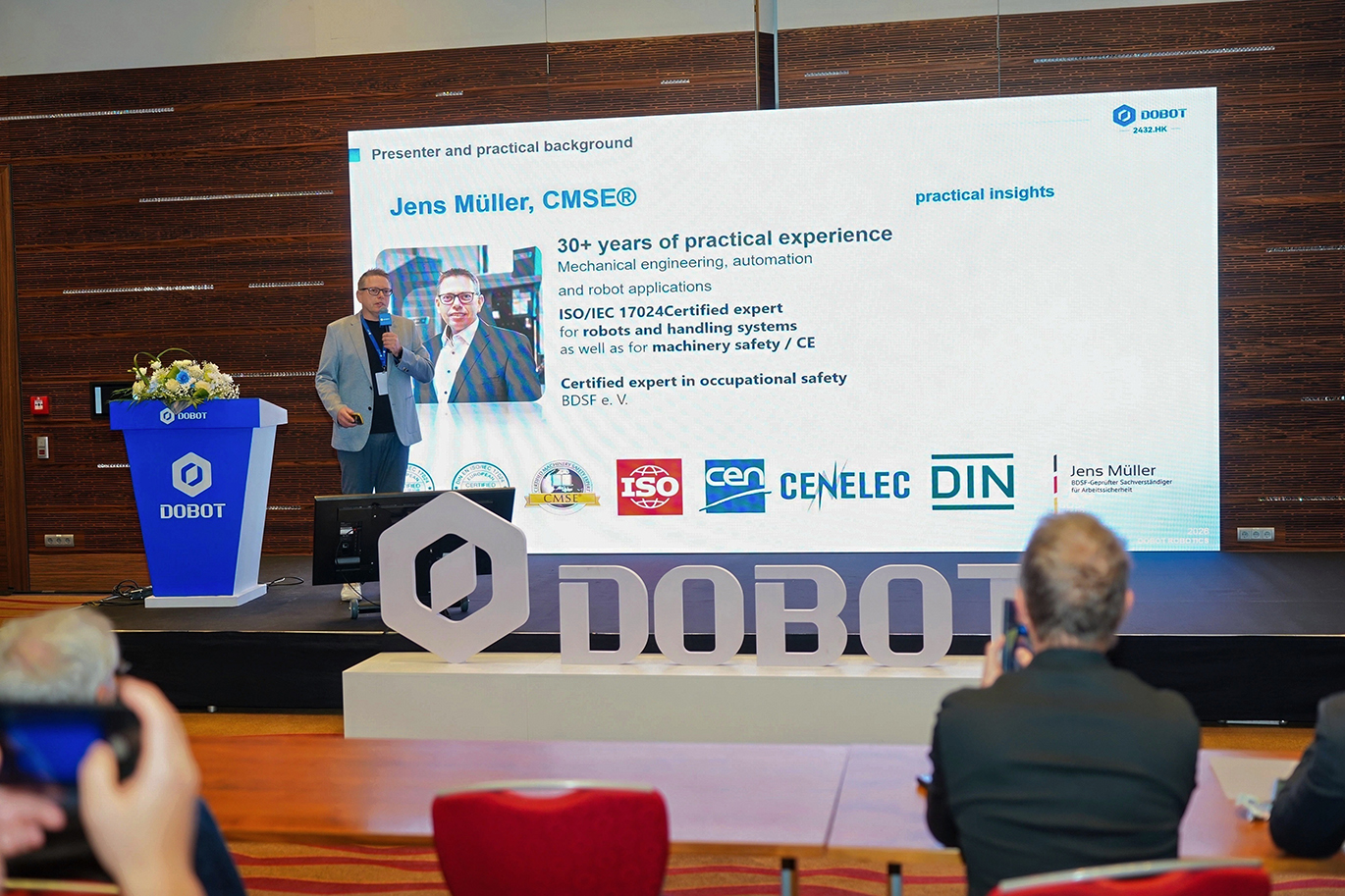
Standardisation expert for humanoid robotics Jens Müller explained the standards and safety frameworks required for broad adoption. Tobias Stempfle, an expert in Physical AI, addressed the requirements of European small and medium-sized enterprises and the question of how new technologies can be integrated into existing production environments and automation concepts.
Connecting education, research and industrial innovation
The further development of the robotics ecosystem also depends on the training of qualified specialists and on scientific research.
As part of the Education Forum, the DOBOT Global Education and Advanced Research Institute discussed robotics platforms for research and real-world applications with experts from institutions including Fraunhofer Institutes, the Technical University of Munich and Tecnalia.
The focus was on platform interoperability, safety and documentation support. The aim is to provide students and researchers with stable robotics platforms for their development work while facilitating the transfer of research results from the laboratory into practical applications.
The Education Innovation Experience Zone offered further opportunities for hands-on experience and direct exchange.
From the development of teaching content and laboratory cooperation to the professional development of teachers and joint research projects, DOBOT is building long-term partnerships with education and ecosystem partners. The goal is to link talent development, technological research and industrial requirements more closely.
In the spirit of the conference motto “From Future Innovators to Industrial Innovation,” closer links between education and industry can help turn today’s talent development and research into an important driver of the next generation of industrial innovation.

 Metal Processing
 Automotive
 Food & Beverage
 Chemical
 Consumer Electronics
 Healthcare
 New Retail
 Semiconductor
 Welding
 Palletizing
 Loading and Unloading
 Assembly
 Bin Picking
 Gluing
 Insertion
 Polishing